
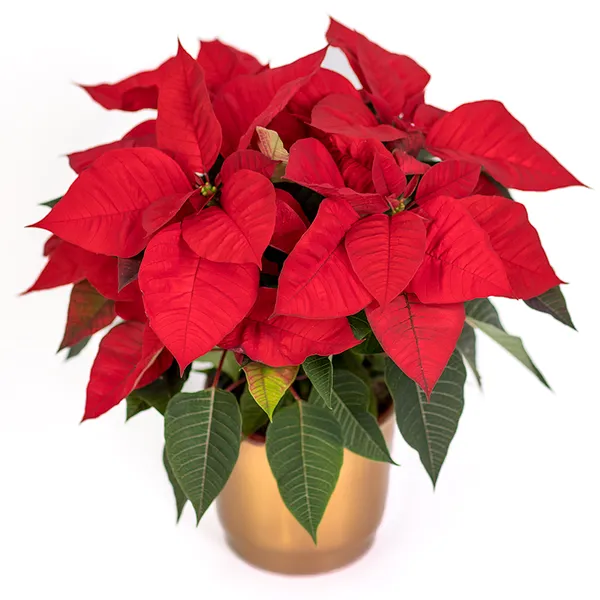
Red Star
Poinsettia: The Festive Holiday Icon
Poinsettias are iconic Christmas flowers, known for their vibrant red blooms and green foliage. Symbolising joy and celebration, they are popular holiday decorations. Native to Mexico and called the "Christmas Flower," they have a rich cultural history. Poinsettias also come in white, pink, and marbled varieties, adding versatility to holiday decor.


COMMON NAME
Poinsettia

BOTANICAL NAME
Euphorbia pulcherrima

ORIGIN
Mexico

PEOPLE ALSO CALL IT
Christmas Flower, Mexican Flame Leaf

FLOWERING TIME
Winter, particularly around December

ASPECT
Bright, indirect sunlight

SYMBOLISM
Joy, celebration, success, purity
Care tips for poinsettia in a nutshell
Position: bright, but out of direct midday sun
Temperature: 15 to 22 °C, never below 12 °C
Draughts: avoid them at all costs, including when airing the room
Watering: sparingly, once the top of the soil feels dry
Standing water: pour away excess water after 15 minutes
Distance: not directly above a radiator and not next to the fruit bowl

The right spot for your poinsettia
Poinsettias like it bright and warm. An east- or west-facing window is ideal. It provides plenty of daylight, but not hours of strong direct sun. Keep the temperature between 15 and 22 °C. Below 12 °C things get critical for the plant.
Just as important is what to avoid:
- Draughts: even briefly opening a window right next to the plant can make it drop leaves.
- Cold windowsills: stone sills get very cold in winter. A wooden or cork mat protects the roots.
- Direct heat from radiators: dry, warm air makes the leaves wilt.
- The fruit bowl: ripe fruit such as apples gives off ethylene, a ripening gas poinsettias are sensitive to.
How to water a poinsettia
The most common mistake is too much water. Only water your poinsettia once the top of the soil has dried out. This is usually once or twice a week, depending on room temperature. Use water at room temperature and pour away any excess from the saucer or outer pot after about 15 minutes.
The soak method works especially well: stand the pot in a bowl of water for a few minutes until no more air bubbles rise, then let it drain thoroughly.
Too much or too little water? Yellow, soft leaves and wet soil point to overwatering. Drooping leaves with dry soil mean the plant is thirsty.
Why is my poinsettia losing its leaves?
If a poinsettia suddenly drops its leaves, one of these is almost always the reason:
- Cold: just a few minutes in frost, for example on the way home from the shop, can damage the plant. The effects often only show a few days later.
- Draughts from open windows or doors.
- Standing water: the roots rot and the plant sheds its leaves.
- Too little light: in dark corners, a poinsettia quickly loses colour and leaves.
- Moving it around: poinsettias like consistency. Find a good spot and leave the plant there.
If only a few lower leaves fall, that's normal. If the plant loses many leaves at once, check its position and how often you water it.
Poinsettia care after Christmas
With a little care, your poinsettia doesn't have to end up on the compost after the holidays. From February, water it a little less and keep it somewhere bright and warm. In April or May, cut the stems back by about half and repot the plant in fresh soil.
Once night temperatures outdoors no longer drop below 15 °C, your poinsettia can move to a sheltered, partly shaded spot on a balcony or patio. Feed it every two weeks over the summer, and bring it back indoors before autumn turns cool.
How to make a poinsettia bloom again
The poinsettia is a short-day plant: its bracts only change colour after a long period with little light. To have it glowing again by Christmas, it needs about twelve hours of complete darkness every day for six to eight weeks, starting in early October.
Here's how:
- From around 6 pm, put the poinsettia in a dark cupboard or cover it with a cardboard box.
- Bring it back to a bright spot at around 8 am the next morning.
- Make sure no lamp light reaches the plant in the evening.
After a few weeks, the top leaves will start to colour. From then on, the poinsettia can go back to its usual spot.
Symbolism & Meaning
Poinsettias symbolise joy, celebration, and success, making them a perfect representation of the festive holiday spirit. Their bright red and green colours align with traditional Christmas themes, and they are often used as decorations to bring warmth and cheer into homes. In Mexican culture, the poinsettia is known as "La Flor de la Nochebuena" (Flower of the Holy Night), connecting it to Christmas and the story of a miracle involving a humble gift that transformed into a beautiful flower. This association emphasises themes of humility, generosity, and joy during the holiday season.